Reflections on ODNE 2025: From Insights to Impact
By Julia Flower
Today, organisations are shaped by complexity, uncertainty, and shifting demands, requiring them to continuously evolve in their structure, culture, and ways of working.
Leaders are expected to guide through ambiguity, while teams are asked to learn at pace and deliver faster with greater resilience, and the real challenge is maintaining healthy organisations during times of constant change.
The ODNE Conference, themed Insight to Impact, explored how deep insight into systems, behaviours, and culture can be translated into meaningful actions that drive lasting, transformational change.
Day 1 of the conference focused on learning journeys centred around Polarity Management, hosted by Shoshana Boyd Gelfand. The concept of Polarity Management is more relevant than ever: some tensions persist and won't go away. Rather than trying to resolve these tensions, it's essential to learn how to navigate choices such as centralisation vs decentralisation, stability vs change, control vs empowerment, to enable powerful new thinking and interventions. “Organisations change one conversation at a time.”
The Three Horizons Framework presentation and breakout session by Stefan Cousquer from Ashridge offered a renewed perspective on the value of time during the transformation phases. Top teams struggle to balance the short-term (H1) with long-term transformation (H3). Under pressure, most organisations over-index on performance at the expense of strategic innovation.
The Three Horizons framework can enable teams to name the tension and hold structured conversations about the future (H3) while still delivering the present (H1).
It reminds us of how we can best derive value while ensuring that the right conversations occur at each critical stage of the process, managing today’s operations, fostering tomorrow’s innovations, and maintaining a focus on long-term transformation simultaneously.
But those conversations are restricted within rigid systems, as I learned at a breakout session on Adaptive Organisations at a breakout session by Dagmar Woetzel shared in her presentation that responsive systems aren’t just fast and responsive, but they’re also self-aware. They sense, learn, and reshape themselves constantly. “The greatest danger in times of turbulence is not the turbulence; it is to act with yesterday’s logic.”
Sophie Tidman from Mayvin gave a talk about activism in the face of accelerating change. She posed the questions: What happens when we optimise for speed, but forget people?
When we design for seamless efficiency, but erase the friction that enables reflection, resistance, and moral pause?
Her talk, with a focus on Human Futures or Frictionless Systems? challenged us to think beyond automation and convenience. As the quote from James Bridle, “We think so much like computers today because they've defined what is thinkable.” If we are to reclaim human agency, we must also rethink what is possible—and who decides.
MirrorMirror’s Lindsay Uittenbogaard highlighted the challenges of team alignment and reminded us that organisational health is seldom just about vision; it's also about ensuring people share the same context and direction. The vantage points she described in her framework will help us understand not just what's broken, but why. “Alignment is not agreement. It’s shared clarity and direction.”
The final presentation of day 1, given by Hélène Casanova from Nexans highlighted how cultural transformation, from Purpose to Values, can enable real business change. Taking a pragmatic approach, aligning values with what matters most to employees. By connecting purpose, strategic intent, and engagement plans, culture became a lever for execution.
How can we make an impact? The challenge lies in identifying how organisations can take action in this fast-paced world, where complexity and change present ongoing challenges.
Gertie Arts and Col Ralf Goossens from the Netherlands MoD provided a compelling example of how transformation programmes can pivot at rapid speed amidst organisational bureaucracy and complexity.
Faced with internal obstacles hindering their delivery process, the organisation recognised that the traditional governance framework was not designed to deliver at pace.
The team established a dedicated innovation team, focusing on speed and learning rather than control. “We simplified governance, we moved to two from four pages of programme governance and allowed the teams to start learning by doing.”
Indeed, this was a systems change. The team worked with adaptive funding, streamlined approvals, and a deliberate space to test, fail, and iterate. The impact wasn’t just in what they built, but in how they developed their capacity to respond. “The difference wasn’t just the team, it was the system we designed around them.”
Nanda Burke from Siemens highlighted the need for coherence in the midst of chaos during large-scale transformations. With multiple leaders and disjointed initiatives, the risk of fragmentation was significantly increased. Their proposed solution involved a streamlined team that encouraged collaboration without imposing rigid structures, instead fostering alignment and a sense of purpose. “If we didn’t bring these parallel efforts together, we were building a Frankenstein organisation.”
It’s impossible to talk about transformation today without considering how AI is reshaping work. Markus Edgar Hormeß led a breakout session on Teaming with AI. As AI becomes embedded in every workflow, the timely question was asked: What is your team’s AI strategy? Not just in terms of tools, but in how people and AI will co-create work together. Markus’ view is that AI will lead to smaller teams, bigger impact, with more autonomy. He also pointed out that acting differently is not merely about rushing towards the new. It is about creating new systems with the same care we once devoted to older systems that can be flexible and remain true to shared values.
The path from Insights to Impact is a continuous practice of tuning into complexity, acting with purpose, and designing systems that enable people to thrive.
Key Takeaways for me:
- Thinking in Polarity helps us manage creative tensions, rather than resorting to false choices.
- Working across horizons allows organisations to act now, evolve next, and imagine beyond.
- Alignment is sustained through clarity and shared purpose, not just consensus.
- Adaptiveness is built into the system, not added as an afterthought.
- Values and Purpose guide not just messaging, but day-to-day and strategic decision-making.
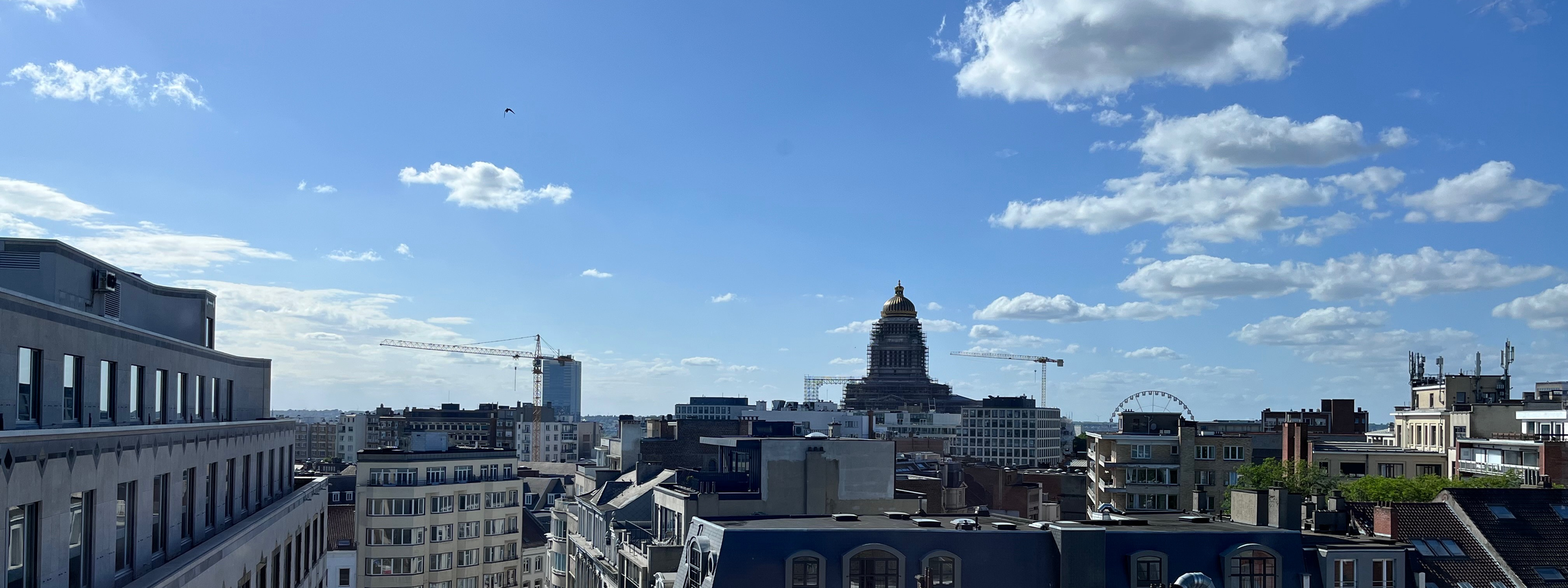
The ODNE conference offered a wealth of benefits, including enlightening learning experiences, engaging discussions with other professionals and leaders, and plenty of networking opportunities in the beautiful city of Brussels.
If you're looking to enrich your OD knowledge and explore insights that can truly make an impact, ODNE is absolutely the place to be!